

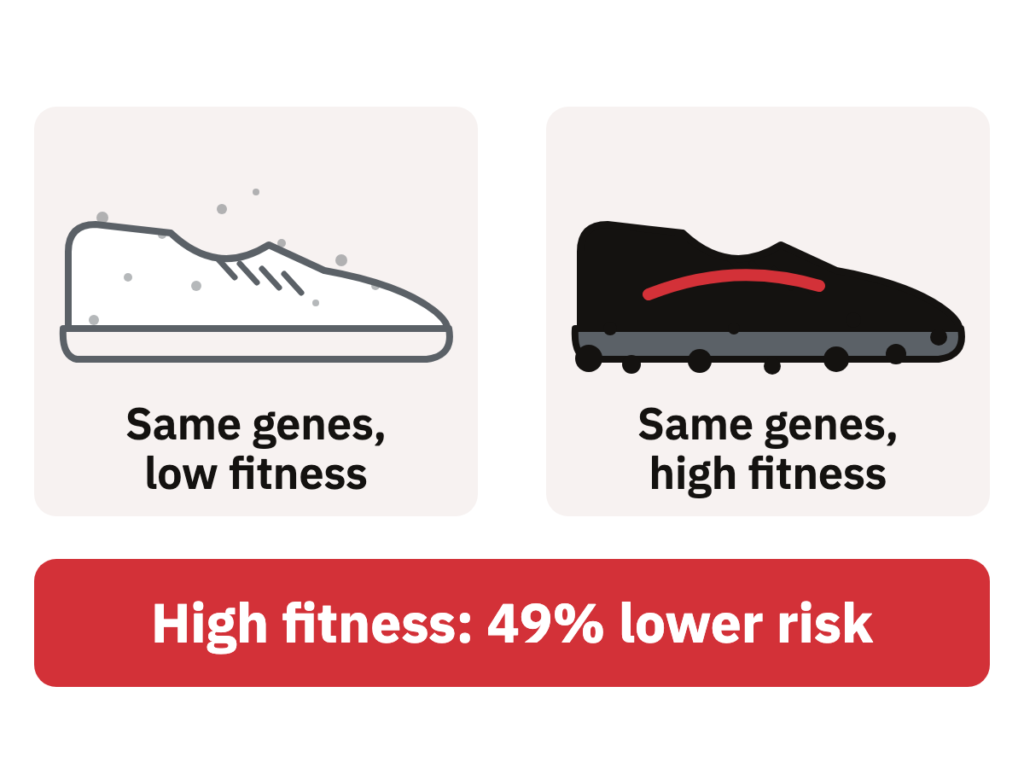
Short answer: Yes, it can. A family history of heart disease doubles your risk, but your genes are not a verdict. Building endurance changes the switches on your genes, which is called epigenetics. Among people with high genetic risk, the fittest had 49% lower risk of heart disease (Tikkanen, Circulation, 2018).
The short version
- Heart disease in a parent or grandparent doubles your risk, says Dr Naresh Trehan.
- Epigenetics means the switches on your genes. Running moves those switches.
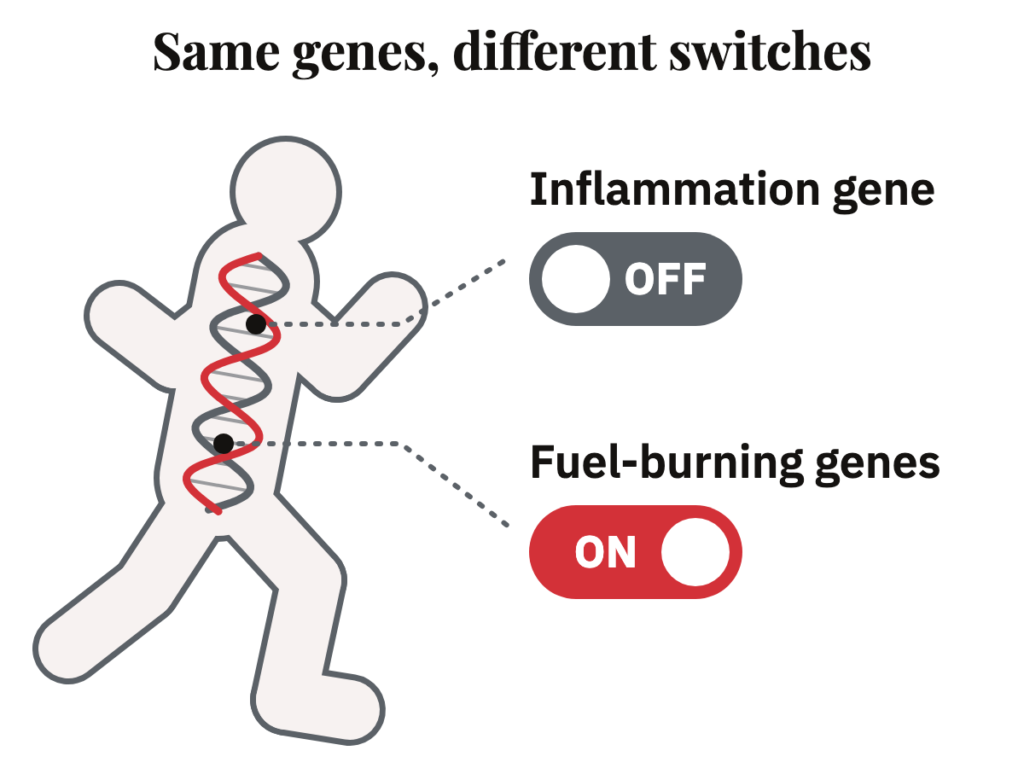
- Exercise quietens an inflammation gene and switches on genes that burn fuel.
- With high family risk, the fittest people had 49% lower risk of heart disease.
- You do not need to be fast. You need to keep going, week after week.
What did the doctor say?
On 28 September 2026, Dr Naresh Trehan told ANI that heart disease in your family doubles your chances. That means a parent, an uncle or a grandparent. He said such people should get their first heart check before 25. It is good advice, and every runner with that family story should follow it.
But many of us heard something else in that news. We heard: it is in my genes, so what can I do? This post is the answer to that question.
Is my heart already decided by my genes?
No. You get your genes from your parents, and they do not change. But each gene has small switches on it, and the switches decide how loudly the gene speaks. The science of these switches is called epigenetics.
Here is the good news. What you do every day moves those switches. Your father’s genes live in you, but your legs decide which of them get the loudest voice.
Epigenetics, in one line: same genes, different switches, different life.
What does running do to the switches?
When you run, your muscles send the same message to your cells, over and over. Over weeks, the cells answer by changing their switches. Scientists have measured this.
It quietens a harmful gene
Inflammation that never switches off is hard on the heart. In older adults, six months of brisk and easy walking kept an inflammation gene quieter (Nakajima, Int J Sports Med, 2010). If walking can do that, a steady weekly run is sending the same signal.
It switches on helpful genes
One exercise session turned on genes that help your muscles burn fuel, by moving their switches (Barrès, Cell Metabolism, 2012). Six months of exercise changed the switches on 7,663 genes (Rönn, PLoS Genetics, 2013). Your body literally reads itself differently when you train.
Does fitness really beat a bad family history?
The biggest study says yes. The UK Biobank followed 502,635 people for about six years. Among people with high genetic risk, the fittest had 49% lower risk of heart disease than the least fit (Tikkanen, Circulation, 2018).
Another study of 55,685 people found the same pattern. People with the highest genetic risk who lived a healthy life had 46% lower risk of heart events (Khera, NEJM, 2016). Regular exercise was one of the four habits that made up that healthy life.
Where do I start?
Start with a heart check, as Dr Trehan says, especially if heart disease runs in your family. If you have a heart condition or strong risk factors, a supervised start is the safe way. Our sister clinic, Cardiac Rehab, does exactly that, with a physician watching every step. Then join us on the road. The medical side of this story, with the full science, is on the Cardiac Rehab blog.
Build slowly. Walk first, then walk and jog, then run. Endurance is built over months, not in one weekend, and the switches move only while you keep moving. The runner who comes back every week is the one whose genes hear the new story.
Your questions, answered
Can running change my genes?
Running does not change the DNA itself. It changes the switches on your genes, which is called epigenetics. Studies show exercise quietens an inflammation gene and switches on genes that burn fuel. So your genes are read differently when you are fit.
My dad never ran. I run 5K every Sunday. Do we share the same heart?
You share many genes, but not the same switches. Your running sends signals his body never got. In a study of 502,635 people, the fittest with high genetic risk had 49% lower risk of heart disease. Your father’s genes live in you, but your legs decide which of them get the loudest voice.
Is running safe if heart disease runs in my family?
For most people, yes, after a check. Get your first heart check early, as Dr Naresh Trehan advises. If the check finds a heart problem, start with physician supervised exercise, then build up to running. Endurance is built over months, not in one weekend.
How much running do I need?
There is no magic number, but more fitness means lower risk in the studies. Start with walking, add jogging, and keep it up every week. The switches change while you keep moving, so steady weeks matter more than one big run.
Start with the next run
You do not need to be fast, and you do not need to be young. Find the next Telangana Runners run in Hyderabad at www.TelanganaRunners.com. Come once, walk if you need to, and come back next week. That is how endurance starts, and how your genes hear a new story. While you build up, read what every run does for your breathing: Does running make your lungs stronger?
References
- ANI. Don’t wait for symptoms; get your heart checkup done before 25 yrs of age, says Medanta Group Chairman Dr Trehan. 28 September 2026. aninews.in/news/national/general-news/dont-wait-for-symptoms-get-your-heart-checkup-done-before-25-yrs-of-age-says-medanta-group-chairman-dr-trehan16020260928214532
- Tikkanen E, Gustafsson S, Ingelsson E. Associations of fitness, physical activity, strength, and genetic risk with cardiovascular disease. Circulation. 2018. doi.org/10.1161/CIRCULATIONAHA.117.032432
- Khera AV, et al. Genetic risk, adherence to a healthy lifestyle, and coronary disease. N Engl J Med. 2016. doi.org/10.1056/NEJMoa1605086
- Nakajima K, et al. Exercise effects on methylation of ASC gene. Int J Sports Med. 2010. doi.org/10.1055/s-0029-1246140
- Barrès R, et al. Acute exercise remodels promoter methylation in human skeletal muscle. Cell Metab. 2012. pubmed.ncbi.nlm.nih.gov/22405075
- Rönn T, et al. A six months exercise intervention influences the genome-wide DNA methylation pattern in human adipose tissue. PLoS Genet. 2013. doi.org/10.1371/journal.pgen.1003572