


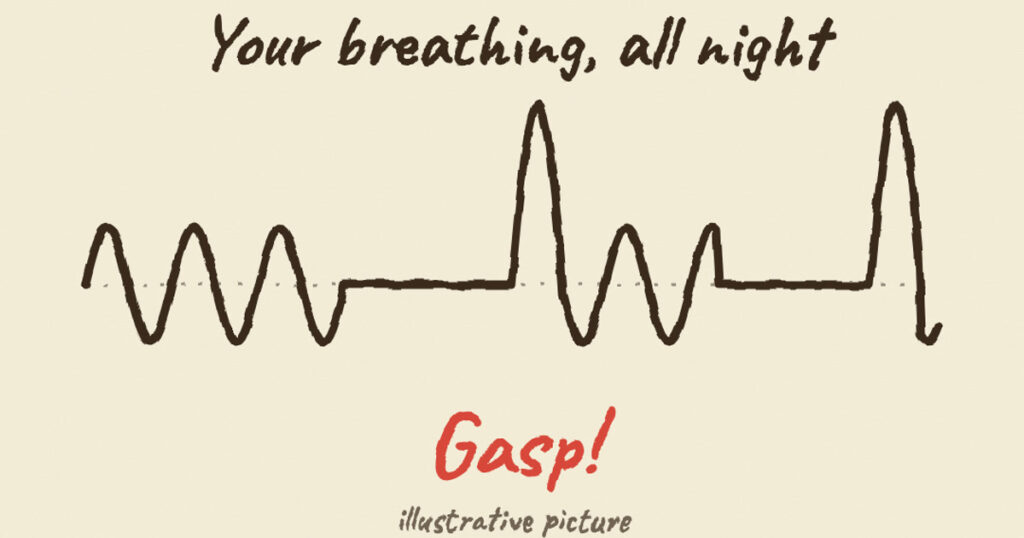
Short answer: Do you sleep eight hours and still wake up tired? Loud snoring can go with a throat that keeps narrowing at night, low oxygen and broken sleep. In adults with sleep apnea, supervised exercise lowered breathing events by 6.27 an hour. Walk first, then jog, and tell your doctor about loud snoring.
The short version
- In sleep apnea the throat airway repeatedly narrows or collapses during sleep (Eckert 2008).
- The American Heart Association lists three results: intermittent low oxygen, automatic nervous system swings and broken sleep.
- In 65,037 people, habitual snoring went with a hazard ratio of 1.15 for coronary heart disease and 1.26 for stroke.
- Whether the risk comes from sleep apnea or from snoring alone is still controversial.
- In people with sleep apnea, supervised exercise lowered breathing events by 6.27 an hour (5 studies, 129 people).
What loud snoring does in your throat
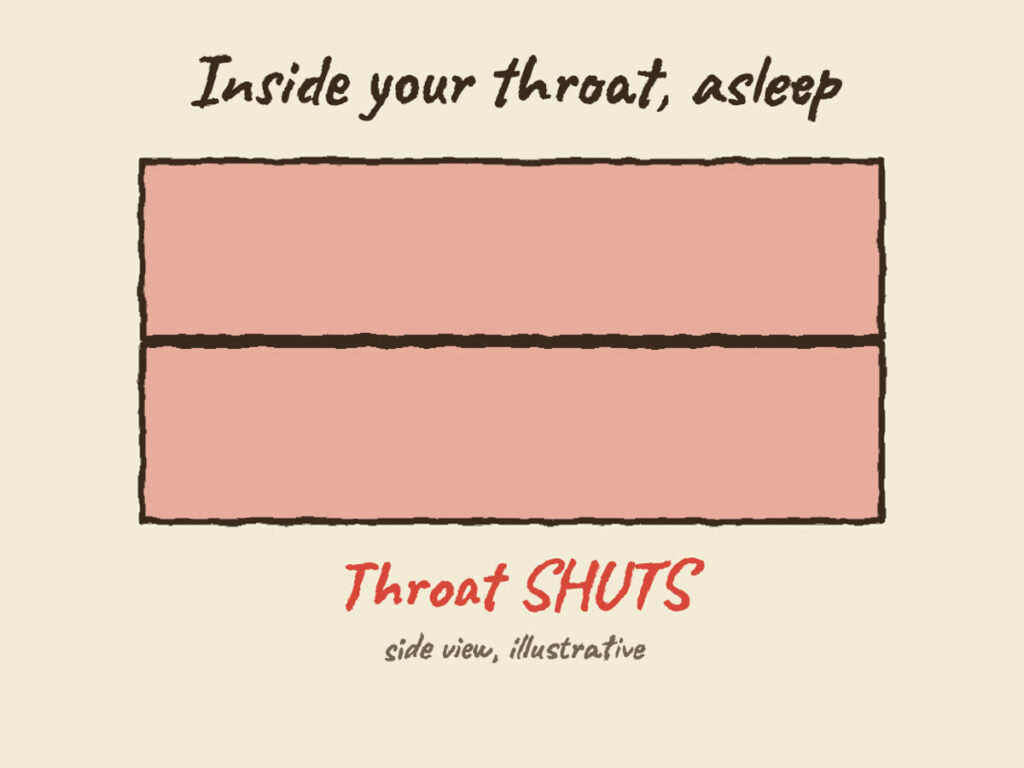
Snoring is a sound made when the airway in the throat is narrow during sleep. In obstructive sleep apnea, a related condition, a review of how it works describes repeated narrowing or collapse of the throat airway during sleep. That review also links the condition to daytime sleepiness and a higher risk of heart and blood vessel disease.
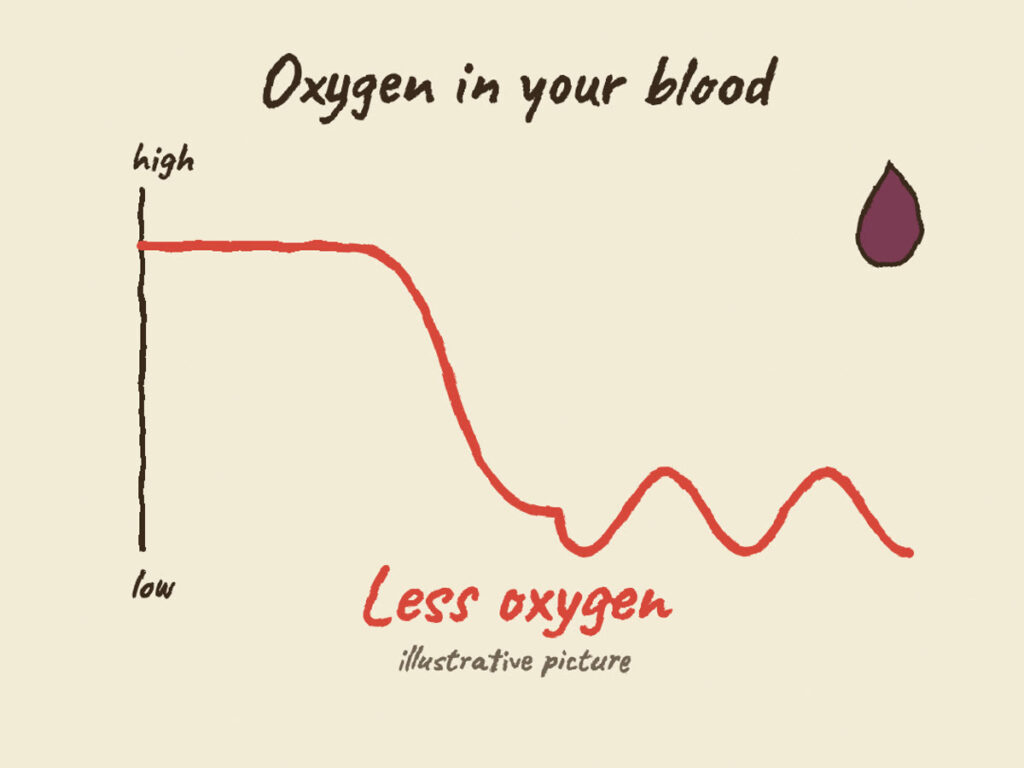
An American Heart Association statement says the repeated full or partial blockages cause three things: intermittent low oxygen in the blood, swings in the body’s automatic nervous system, and broken sleep. The drawings below show the idea in a simple way. Real throats and real nights are more complex.
Why you can sleep eight hours and still wake up tired
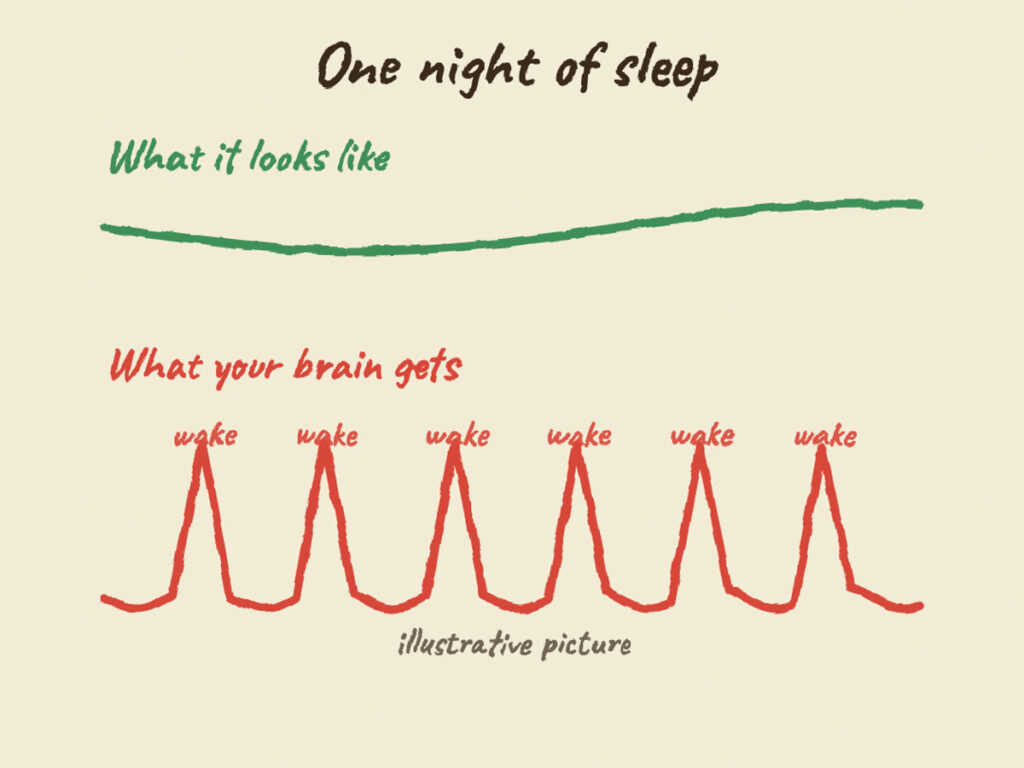
If the airway keeps blocking and your sleep keeps breaking, the night can look long on the clock and still not rest you. The two sources above point the same way: broken sleep and daytime sleepiness go with sleep apnea. In our video we said it looks like you slept, but you did not rest. That is the picture below.
Many things can make you tired, such as stress, other illness and late nights, so tiredness alone does not tell you the cause. If you snore loudly and are sleepy in the day, tell your doctor. A doctor can decide whether a sleep test is right for you.
Does snoring raise health risk?
A meta-analysis of 8 studies followed 65,037 people who reported habitual snoring. Compared with non-snorers, the pooled hazard ratio was 1.15 for coronary heart disease (95% confidence interval 1.05 to 1.27) and 1.26 for stroke (1.11 to 1.43). The ratio for cardiovascular disease as a whole was 1.26 (0.98 to 1.62), which was not statistically clear, and the ratio for death from any cause was 0.98 (0.78 to 1.23).
The authors call habitual snoring a mild but statistically significant risk factor for stroke and coronary heart disease. They also say it is still controversial whether the risk comes from sleep apnea or from snoring alone. These are averages from studies that watched people over time, so they show a link and not a cause.
Can walking and running help?
A meta-analysis of exercise training in adults with sleep apnea pooled 5 studies with 6 groups and 129 people. Supervised exercise lowered the number of breathing events per hour (the apnea-hypopnea index) by 6.27 on average (95% confidence interval 3.99 to 8.54). Sleep efficiency rose by 5.75%, and the daytime sleepiness score fell by 3.3 points.
Body weight changed little (a fall of 1.37 in body mass index, which was not statistically clear), so the gain did not come only from weight loss. The people in these studies had diagnosed sleep apnea, so the result does not show the same effect for simple snoring. Exercise is an addition to the treatment your doctor chooses, and it does not replace it. The American Heart Association statement says all people with sleep apnea should be considered for treatment, and it lists lifestyle changes, weight loss, breathing machines and mouth devices as options for the doctor.
How to start
If you snore loudly, start building your walking or jogging endurance slowly. Walk first, then jog, and add a few minutes at a time. Tell your doctor about the snoring, especially if you are sleepy in the day, because a sleep test may be needed.
If you feel chest pain, dizziness or unusual breathlessness, stop and see a doctor. Do not push through it. Building endurance one easy step at a time is the aim.
Your questions, answered
Is snoring the same as sleep apnea?
No. Snoring is a sound, and sleep apnea is repeated narrowing or collapse of the airway during sleep, as a review describes it. They can go together. A meta-analysis says it is still controversial whether health risks come from sleep apnea or from snoring alone. Only a doctor can tell you which one you have.
Does snoring raise the risk of a heart attack?
In a meta-analysis of 65,037 people, habitual snoring went with a hazard ratio of 1.15 for coronary heart disease (1.05 to 1.27). The authors call it a mild risk factor. It was linked to stroke too, with a ratio of 1.26. The ratio for all cardiovascular disease together was not statistically clear.
Can exercise reduce sleep apnea?
In adults with sleep apnea, supervised exercise lowered the apnea-hypopnea index by 6.27 events an hour on average, in a meta-analysis of 5 studies with 129 people. Sleep efficiency and daytime sleepiness also improved. Weight changed little. Exercise is an addition to your doctor’s treatment.
Why do I wake up tired after eight hours of sleep?
There are many reasons. One is broken sleep from repeated airway blockages, which an American Heart Association statement lists with low oxygen and nervous system swings. If you snore loudly and feel sleepy in the day, ask your doctor about a sleep test.
Build Your Endurance Now
Walk first, then jog, and build up slowly. Read the heart side on Cardiac Rehab: snoring and heart health.
References
- Yeghiazarians Y, et al. Obstructive sleep apnea and cardiovascular disease: a scientific statement from the American Heart Association. Circulation. 2021;144(3):e56-e67. pubmed.ncbi.nlm.nih.gov/34148375
- Eckert DJ, et al. Pathophysiology of adult obstructive sleep apnea. Proc Am Thorac Soc. 2008;5(2):144-53. pubmed.ncbi.nlm.nih.gov/18250206
- Li D, et al. Self-reported habitual snoring and risk of cardiovascular disease and all-cause mortality. Atherosclerosis. 2014;235(1):189-95. pubmed.ncbi.nlm.nih.gov/24854629
- Iftikhar IH, Kline CE, Youngstedt SD. Effects of exercise training on sleep apnea: a meta-analysis. Lung. 2014;192(1):175-84. pubmed.ncbi.nlm.nih.gov/24077936
See us first on Google. Add Telangana Runners as a preferred source.